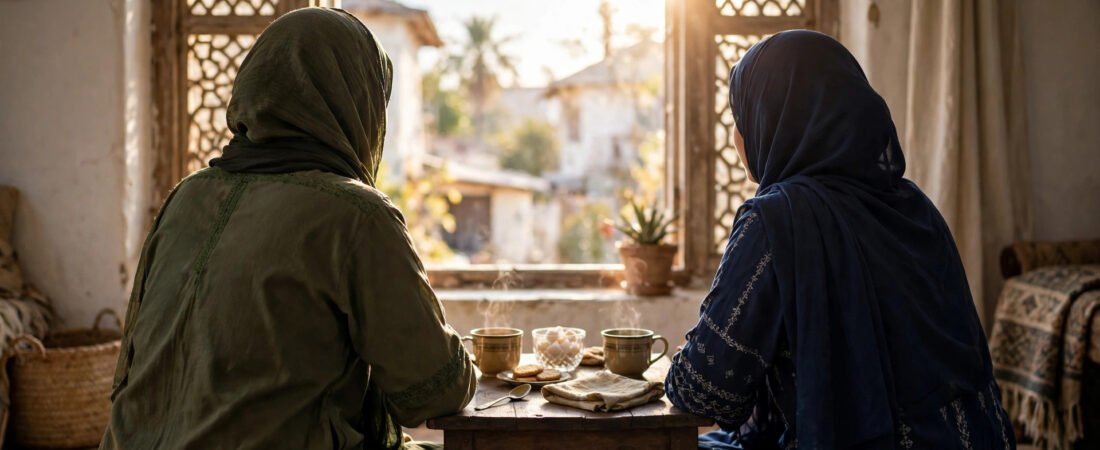
Accepting a marriage proposal is one of the most significant decisions in a person’s life. In Pakistan, the rishta process often moves through introductions, family meetings, and a relatively short period of discussion before a decision is expected. That pace makes it even more important to use the time well and ask thoughtful questions early, while there is still space to reflect without pressure.
Asking questions is not a sign of distrust. It is a sign of seriousness. Two people can be well-intentioned and still be incompatible in their expectations about work, money, family life, or where to live. Discussing these topics respectfully before accepting a proposal helps both sides make a decision based on understanding rather than assumption.
Questions About Values and Daily Life
Start with the broad questions that shape everyday life together. How does each person understand the role of religion in the home? What does a typical day look like now, and how might it change after marriage? How important are social gatherings, privacy, and time with extended family?
These questions do not have single correct answers. What matters is whether the answers are compatible and whether both people can speak honestly. Pay attention not only to what is said, but also to how differences are handled. A calm discussion about a difference is a good sign; dismissing a concern without listening is worth noting.
It also helps to discuss habits that affect daily comfort, such as sleep schedules, cleanliness, guests at home, and expectations around meals and household routines. Small habits are rarely a reason to reject a proposal on their own, but understanding them early prevents minor issues from becoming repeated frustrations.
Questions About Education and Work
Work shapes income, time, location, and energy, so it deserves clear discussion. Ask about current work, future career plans, and whether further study is planned. If one person hopes to continue working after marriage and the other expects a different arrangement, that difference should be discussed openly, with family where appropriate, before any commitment.
Career plans and relocation
Clarify whether the job may require moving to another city or country, travelling frequently, or working irregular hours. If one person is settled abroad or plans to apply for opportunities overseas, discuss timelines and what life in that place would realistically involve for both partners.
Expectations about working after marriage
Be specific rather than general. Does “support for work” mean full-time work, part-time work, work from home, or support only until children arrive? Vague agreement on this topic is a common source of later disagreement, so gentle, specific questions are helpful for both sides.
Questions About Finances
Money discussions can feel uncomfortable, but avoiding them does not make them go away. Before accepting a proposal, both sides should have a broad, honest picture of financial expectations.
Useful topics include how household expenses will be shared, whether there are existing financial responsibilities such as supporting parents or repaying a loan, attitudes towards saving and debt, and expectations about the scale and cost of wedding events. You do not need exact figures in an early family meeting, but the general approach should not be a mystery.
Also discuss who will make financial decisions, whether accounts will be managed jointly or separately, and how large purchases will be agreed. There are many workable arrangements; the important thing is that both people understand and accept the one they are entering.
Questions About Family and Living Arrangements
In Pakistan, marriage often brings two families closer, not just two individuals. That can be a source of support and joy, but expectations should still be clear.
Where will you live?
Discuss whether the couple will live with parents, in a separate portion of a family home, or independently. If the arrangement is expected to change over time — for example, living jointly at first and separately later — say so, and discuss what would trigger that change.
Involvement of both families
Ask how often each family expects visits, how festivals and family events are usually spent, and what support elderly parents may need in the coming years. Also discuss boundaries: how will disagreements between the couple be kept private, and how will decisions be made when family opinions differ?
Clear answers here protect relationships on both sides. Most family tension after marriage comes not from bad intentions, but from expectations that were never spoken aloud.
Questions About Health and Wellbeing
Health is a sensitive topic and should be handled with dignity and privacy. At an appropriate stage, and through a suitable channel, it is reasonable for both sides to share information about significant health conditions that could affect married life, treatment, or future plans.
The purpose is not to demand perfection or to pry into private medical history that has no bearing on the marriage. It is to ensure that neither person enters the commitment unaware of something important. If a condition is disclosed, listen with compassion and, where needed, seek proper medical information rather than relying on rumour or assumption.
Questions About Children and the Future
Not every couple will agree on timing, but the broad topic of children should not be left completely undiscussed. Do both people hope to have children? Is there a general sense of timing? How do they view parenting responsibilities, education, and discipline?
Also discuss longer-term hopes: where do you imagine living in five or ten years, what kind of home life do you want to build, and what would you do if plans — careers, health, or family circumstances — changed unexpectedly? Shared flexibility matters as much as shared plans.
How to Have These Conversations Respectfully
The way questions are asked matters as much as the questions themselves. Choose a calm setting, agree on who will be present, and avoid turning a meeting into an interrogation. It is often better to cover a few important topics well across more than one conversation than to rush through a long list in a single sitting.
Listen fully before responding, and allow the other person time to consider a question rather than demanding an immediate answer. Some topics may need to be discussed privately between the prospective couple, within the boundaries each family is comfortable with, while others are better handled family to family.
Take brief notes after each meeting, while impressions are fresh. Note what was agreed, what remains unclear, and what you want to revisit. If something important cannot be resolved or is repeatedly avoided, treat that as information in itself and take time before deciding.
Conclusion
Before accepting a marriage proposal, discuss values, work, finances, family expectations, living arrangements, health, and future plans with honesty and courtesy. These conversations cannot remove all uncertainty — no marriage begins with every answer — but they replace assumption with understanding. A proposal accepted after clear discussion, with family support and personal conviction, rests on a far stronger foundation than one accepted in haste.