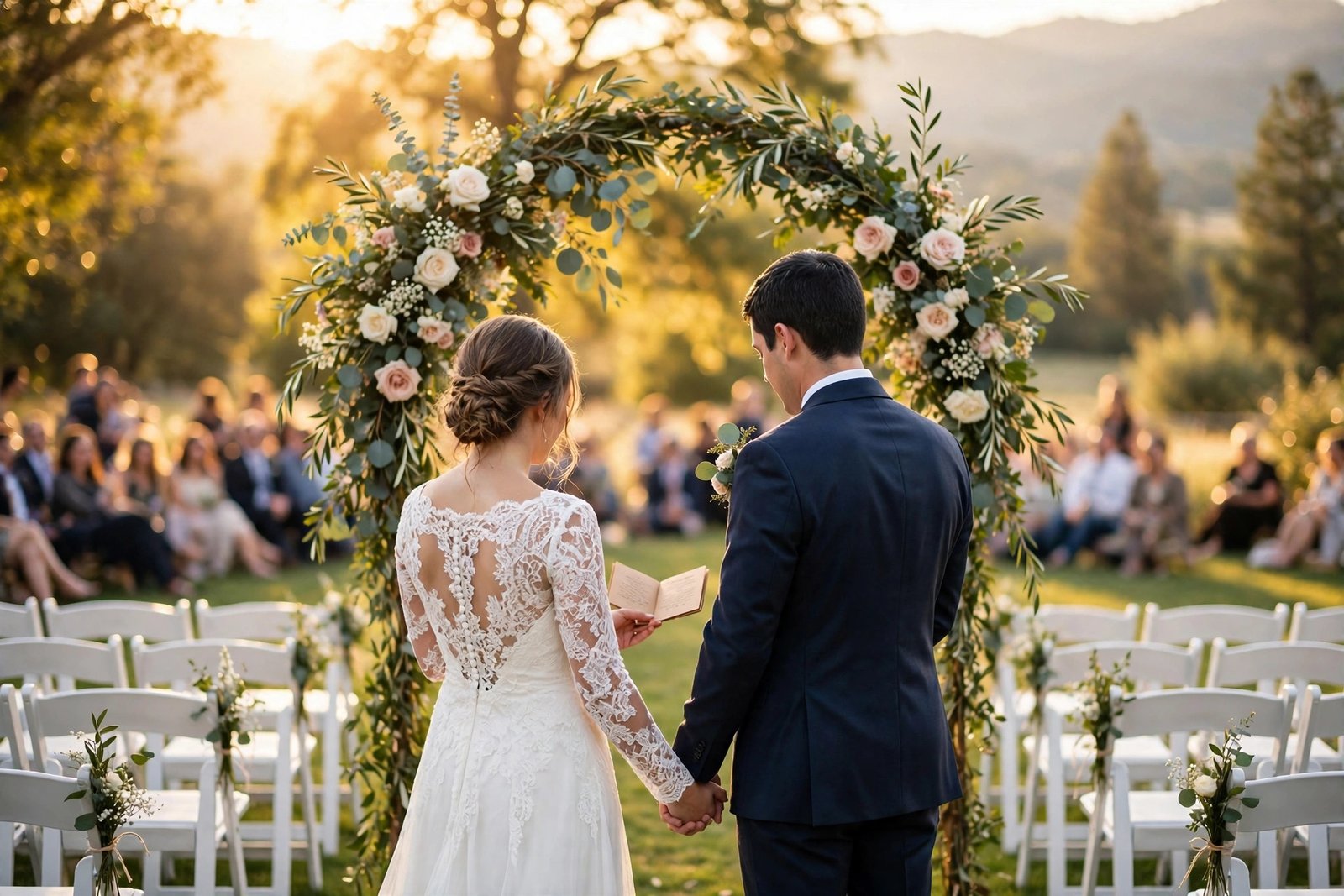
Getting married in the USA is an exciting step, but many couples are surprised to learn that marriage is handled mainly by state and county governments, not by the federal government. This means the exact rules can be different depending on where you live. Still, the general process is similar across the country.
This guide explains how marriage works in the United States in general terms: the marriage license, the common requirements, the ceremony, the marriage certificate, and what to do afterwards. Because every state has its own laws, always confirm the current rules with your local county clerk’s office before you make final plans.
Step 1: Apply for a Marriage License
A marriage license is the legal permission to get married. You do not get married at a church, hall or courthouse first and do the paperwork later — in most states, you must have the license before the ceremony takes place.
Where to apply
Marriage licenses are usually issued by the county clerk’s office (sometimes called the county recorder or marriage license bureau) in the county where the ceremony will be held. Some counties allow you to start the application online, but most still require both partners to appear in person to sign and show identification.
Common requirements
While details vary by state and county, applicants are usually asked for:
- Government-issued photo ID, such as a driver’s license or passport
- Proof of age, since both partners must normally be at least 18 years old
- Social Security numbers, if you have them
- Information about any previous marriages, and proof that they have legally ended (for example, a divorce decree or death certificate)
- Payment of the application fee, which varies by county
Some states also ask for birth certificates. A few states historically required blood tests, but this is now rare. If either partner is under 18, special rules and court approval may apply, and some states do not allow under-18 marriages at all.
Waiting periods and validity
Many states have a short waiting period between the day you receive the license and the day you can hold the ceremony. This is often between one and three days, though some states have no waiting period and a few allow the waiting period to be waived.
A marriage license is also only valid for a limited time, commonly 30 to 90 days. If you do not hold the ceremony within that window, the license expires and you must apply again. Plan your dates carefully.
Step 2: Hold the Ceremony
Once you have the license, the ceremony itself can be religious or civil, large or small. What makes the marriage legal is not the size of the celebration but that the ceremony is performed by an authorized officiant and properly recorded.
Who can perform the ceremony
Authorized officiants usually include:
- Judges, justices of the peace and court clerks (for civil ceremonies)
- Religious leaders such as priests, pastors, imams and rabbis
- In many states, a friend or family member who has become legally ordained or received one-day authorization
Rules about officiants differ by state, so check that your chosen officiant is legally recognized where you will marry.
Witnesses and signing the license
Most states require one or two witnesses to be present and to sign the marriage license after the ceremony. The officiant also signs the license and is responsible for returning it to the county office within a set number of days. Make sure this step is done — an unreturned license can delay your legal proof of marriage.
Step 3: Get Your Marriage Certificate
After the signed license is recorded, the county issues your marriage certificate. This is the official document that proves you are legally married.
You will usually need certified copies of the certificate for banks, insurance, immigration matters and government records, so many couples order several copies at the start. Fees for copies are generally modest and vary by county.
Changing Your Name After Marriage
Changing your last name after marriage is optional, and many couples keep their names, hyphenate, or combine them. If you decide to change your name, the marriage certificate is the key document. The usual order is:
- Update your Social Security card with the Social Security Administration
- Update your driver’s license or state ID
- Update your passport, bank accounts, employer records and other documents
Each agency has its own form and may require certified copies of your marriage certificate. The Social Security Administration explains the process on its official website, ssa.gov.
Special Situations
Marrying a US citizen or non-citizen
Marriage to a US citizen does not automatically give a non-citizen legal immigration status, and marriage to a non-citizen does not change a citizen’s status. Immigration involves separate federal applications and interviews. For accurate information, use the official US Citizenship and Immigration Services website, uscis.gov, and be careful of anyone who promises guaranteed results for a fee.
Common-law marriage
Only a small number of states still recognize new common-law marriages, where a couple is treated as married without a license or ceremony. Most states do not. Do not assume living together makes you legally married; check your state’s law.
Getting married in a different state
You can marry in a state where you do not live, but you must follow that state’s rules and get the license from the correct county. A marriage that is legally performed in one US state is generally recognized in all other states.
Conclusion
The process of getting married in the USA follows the same basic path almost everywhere: apply for a marriage license at the county clerk’s office, meet the age and identification requirements, hold a ceremony with an authorized officiant and witnesses, and then receive your marriage certificate. The details — fees, waiting periods, validity windows and documents — change from state to state.
Start by visiting your local county clerk’s official website or office, make a checklist of what they require, and apply with enough time before your wedding date. With a little preparation, the legal side of your marriage can be simple and stress-free.