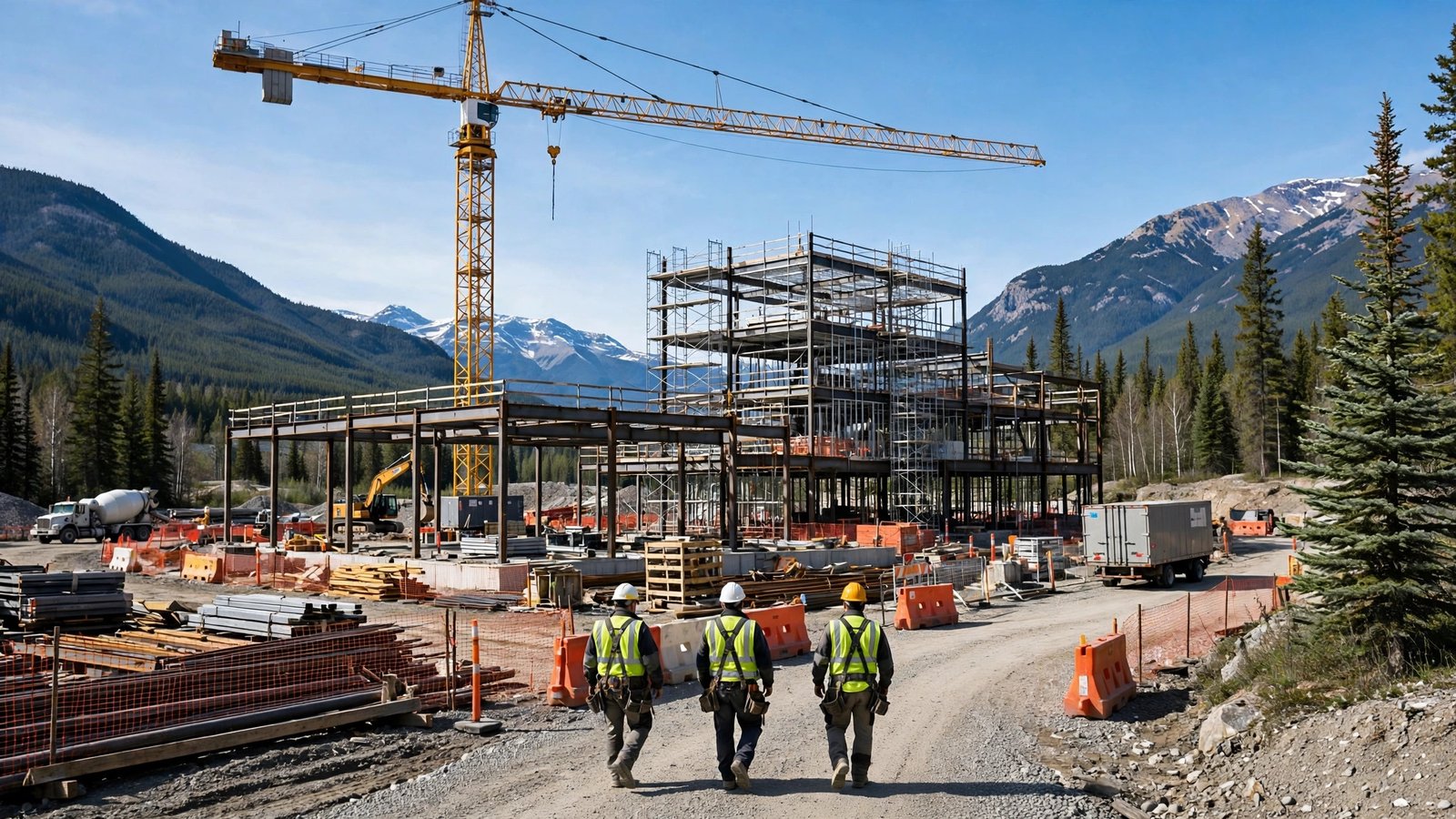
Construction is one of Canada’s largest industries, building homes, hospitals, roads, transit systems and energy projects from coast to coast. The sector includes everything from small renovation crews to massive infrastructure projects, and it offers work for complete beginners as well as highly trained tradespeople. This guide explains the common construction jobs in Canada, how skilled trades and apprenticeships work, and the safety requirements that every worker should understand before stepping onto a site.
Common Construction Roles
General Construction Labourer
Labourers are the entry point for most newcomers to the industry. Duties include moving materials, site clean-up, digging, assisting tradespeople, setting up barriers and signage, and basic demolition. No formal education is usually required, but physical fitness, reliability and a willingness to work outdoors in all weather are essential. Many skilled tradespeople started as labourers.
Skilled Trades
Canada recognises dozens of skilled trades. Common construction trades include:
- Carpenter: Builds and installs wooden structures, framing, formwork and finishes.
- Electrician: Installs and maintains wiring and electrical systems. This is a regulated, compulsory trade in most provinces.
- Plumber: Installs and repairs water, drainage and heating systems. Also regulated in most provinces.
- Welder: Joins metal components for structural and industrial work.
- Heavy equipment operator: Operates excavators, loaders, bulldozers and cranes.
- Concrete finisher, bricklayer and roofer: Specialist trades focused on particular materials and stages of building.
- HVAC technician: Installs and services heating, ventilation and air conditioning systems.
- Painter and drywall installer: Interior finishing trades common in residential and commercial projects.
Supervisory and Technical Roles
Forepersons, site supervisors, estimators, project coordinators and construction managers oversee schedules, budgets, safety and quality. These positions generally require years of site experience, and some require college or university education in construction management or engineering technology.
Apprenticeships and the Red Seal Program
For regulated and many voluntary trades, the standard path is an apprenticeship: a combination of paid on-the-job training under a certified journeyperson and classroom technical training, usually over two to five years depending on the trade and province. Apprentices are registered with their provincial or territorial apprenticeship authority, complete required work hours and exams, and finish as certified journeypersons.
The Red Seal Program sets common standards for many trades across Canada. Passing the Red Seal examination allows a tradesperson’s certification to be recognised in participating provinces and territories, making it easier to move for work. If you trained in construction outside Canada, you may be able to challenge certification exams based on your documented experience, or have your credentials assessed; provincial apprenticeship authorities are the official source for these rules.
Do not pay private agents who claim they can “sell” you a trade certificate or guarantee certification. Certification decisions rest only with provincial authorities and recognised training institutions.
Safety Requirements: The Non-Negotiables
Construction is hazardous work, and Canadian law places duties on both employers and workers. Safety is not optional, and good employers enforce it strictly.
Training and Orientation
- Site orientation: Every worker must receive a site-specific orientation covering hazards, emergency procedures and reporting rules before starting.
- WHMIS: Training on hazardous materials (the Workplace Hazardous Materials Information System) is required where chemicals, fuels or other controlled products are present, which includes most sites.
- Working at heights: Provinces such as Ontario require approved working-at-heights training for workers using fall protection systems. Similar requirements exist across the country.
- Equipment-specific training: Operating forklifts, elevated work platforms, cranes or other machinery requires documented training and, in some cases, licensing.
Personal Protective Equipment (PPE)
Standard site PPE typically includes a hard hat, high-visibility vest or clothing, safety glasses, gloves and CSA-approved safety footwear with toe protection. Hearing protection and respiratory protection are required for specific tasks. Employers must explain what they provide; some require workers to supply their own basic footwear and hard hat, so ask before your first day.
Rights and Responsibilities
Workers in Canada have the right to know about hazards, to participate in safety through health and safety committees or representatives, and to refuse work they reasonably believe is dangerous, following the proper reporting process. You also have the responsibility to follow safety rules, use PPE and report hazards and injuries immediately. Provincial occupational health and safety regulators publish these rules in detail, and employment standards and workers’ compensation boards handle injury reporting and claims.
Working Conditions to Expect
Construction schedules often start early, and hours can be long during peak season. Weather strongly affects outdoor work: summers can be hot and winters extremely cold in many regions, so proper clothing matters. Work may be union or non-union. Unionised sites typically hire through union hiring halls and follow collective agreements covering wages and benefits. Project-based work is common, meaning employment can end when a project finishes, though reliable workers are often moved to the next project by their employer.
Wages vary by trade, province, experience and union status, and job postings should state the rate or range. Never accept vague promises about pay; get the rate in writing.
How to Find Construction Work
- Job Bank Canada lists construction vacancies across the country, including labourer roles.
- Company career pages: General contractors and subcontractors post openings directly.
- Union hiring halls and training centres: For union trades, contact the local union office for your trade.
- Apprenticeship offices and colleges: Provincial apprenticeship authorities and local colleges can explain registration, pre-apprenticeship programs and upcoming intakes.
- Staffing agencies: Some specialise in construction labour; use reputable agencies and never pay a fee to be placed in a job.
Conclusion
Construction jobs in Canada range from entry-level labouring to certified trades and site leadership, with apprenticeships and the Red Seal Program providing structured routes to qualification. Whatever your starting point, treat safety training and protective equipment as essentials, not formalities. Rules for certification, training and wages differ by province and change over time, so confirm the details of any role, apprenticeship or requirement through official provincial sources and the employer’s official website before applying.