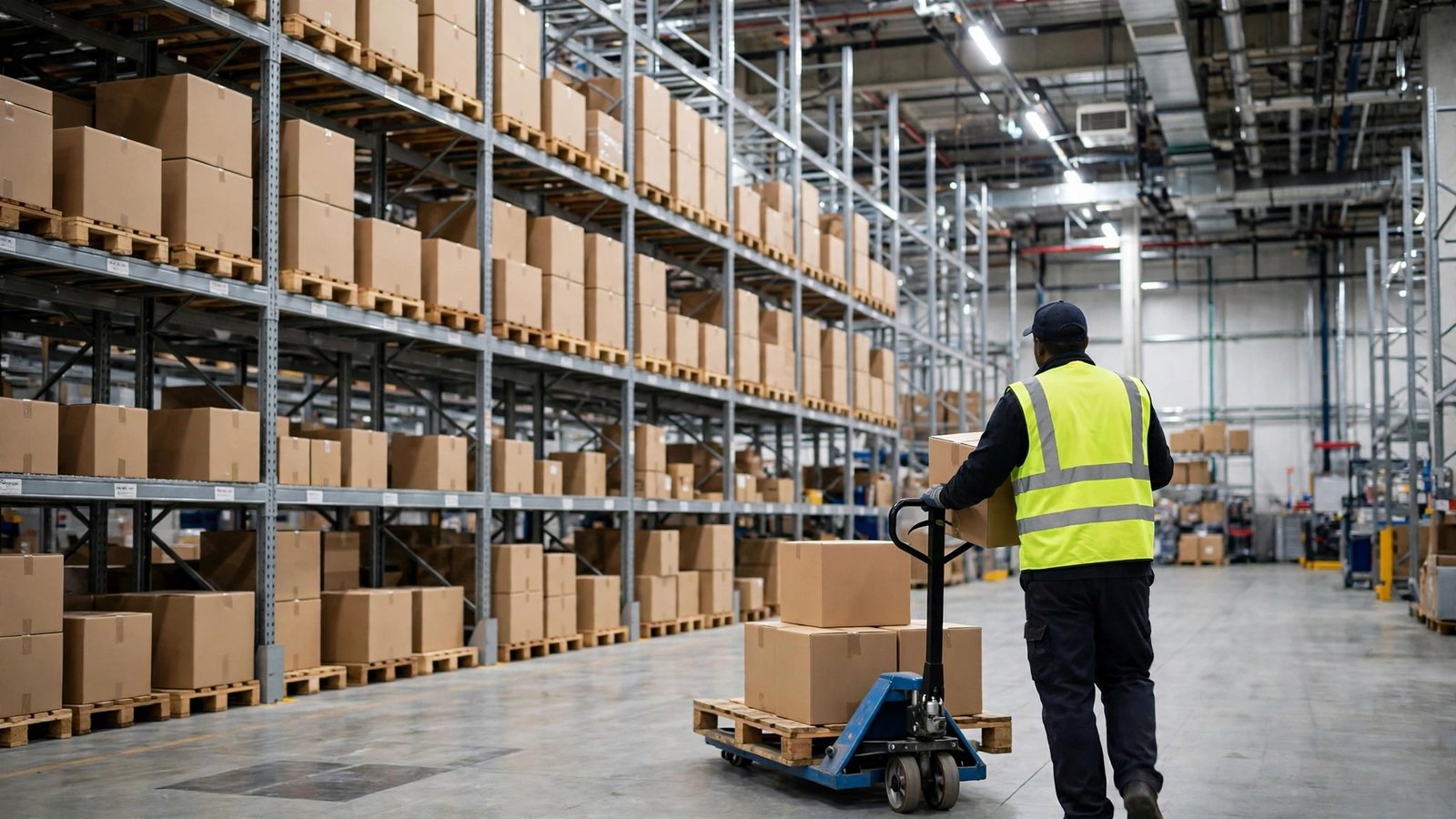
Warehouses are the engine rooms of American retail and e-commerce. Every product ordered online passes through a distribution centre where workers receive, store, pick, pack, and ship goods. Because this sector keeps growing, warehouse jobs in the USA are among the most accessible roles for new workers. This guide explains the common job types, the skills employers look for, and how to apply through safe, official channels.
Common Warehouse Roles
Warehouse Associate
The warehouse associate is the general all-rounder of the distribution centre. Duties include unloading deliveries, checking goods against paperwork, moving stock to storage locations, and keeping work areas tidy. Most employers train new associates on their scanning and inventory systems, so previous experience is helpful but rarely essential.
Order Picker and Packer
Pickers collect items from shelves using a handheld scanner or pick list, and packers box those items, add labels, and prepare them for shipping. Accuracy matters more than speed at first: sending the wrong item costs the company money, so employers value careful workers. These roles often involve walking long distances during a shift.
Forklift Operator
Forklift operators move pallets and heavy stock around the warehouse. Unlike general roles, this position requires certification. In the United States, forklift training must meet Occupational Safety and Health Administration (OSHA) standards, and employers must evaluate operators on the equipment they will use. Having a valid forklift certificate before you apply can significantly improve your chances.
Inventory and Stock Control Clerk
Inventory clerks count stock, investigate discrepancies, and update computer records. The role suits people who are comfortable with numbers and basic software. It is less physical than picking but requires concentration and honesty.
Shipping and Receiving Clerk
These workers book deliveries in and out, check paperwork, and coordinate with drivers. The job combines physical work with administration, and experience with warehouse management systems is an advantage.
Warehouse Supervisor and Team Leader
With experience, associates can progress to team leader and supervisor roles responsible for shift targets, training new staff, and safety checks. Many large employers promote internally, so a warehouse job can become a genuine career path.
Skills and Qualities Employers Look For
- Physical fitness: Most roles involve standing, walking, bending, and lifting. Job adverts usually state the maximum weight you must be able to lift safely.
- Attention to detail: Correct picking, labelling, and counting prevent costly mistakes.
- Basic technology skills: Handheld scanners, tablets, and warehouse software are standard. Confidence with basic devices is enough for most entry roles.
- Teamwork and communication: Warehouses run on coordination between shifts and departments.
- Reliability: Attendance is critical in a shift-based operation, and employers monitor it closely during probation.
- Safety awareness: Following procedures around forklifts, racking, and manual handling protects you and your colleagues.
Typical Requirements
Requirements vary by employer, but common ones include legal authorisation to work in the USA, the ability to pass a background check for some facilities, and availability for shifts that may include nights and weekends. Some employers use pre-employment assessments or physical capability tests related to the actual duties of the role. Read each job posting carefully on the employer’s official careers page, because shift patterns, pay structures, and requirements change and must be confirmed directly with the employer.
Staying Safe at Work
Warehouse safety is regulated by OSHA, and reputable employers provide safety training and personal protective equipment such as gloves, safety shoes, and high-visibility vests. Learn the site rules during induction, report damaged racking or equipment immediately, use correct lifting technique, and never walk behind a reversing vehicle. If a task feels unsafe, you have the right to raise it with your supervisor or safety representative.
How to Apply
Large logistics and retail employers advertise warehouse vacancies on their official career websites, often organised by location. You can also find openings through state workforce agency websites and local American Job Centers, which are supported by the US Department of Labor and provide free employment services. Staffing agencies also supply warehouse workers, but check that the agency is legitimate and never pay an agency a fee to be placed in a job.
When applying, tailor your resume to highlight physical work, reliability, and any relevant certificates such as forklift training or first aid. During the hiring process, employers may invite you to a site tour or group assessment; treat it as part of the interview and wear sensible clothing and footwear.
Watch Out for Scams
Unfortunately, warehouse job scams exist. Warning signs include offers received through messaging apps from people who will not identify their company, requests to buy equipment or gift cards before starting, and any demand for payment in exchange for a guaranteed job or visa sponsorship. Genuine employers recruit through official websites and do not charge applicants. Verify every vacancy on the company’s own careers page before providing personal information.
Conclusion
Warehouse jobs in the USA offer a practical route into steady work, with roles ranging from picking and packing to forklift operation and inventory control. Build the core skills of accuracy, reliability, and safety awareness, obtain certification where it helps, and apply through official employer websites, state workforce services, and American Job Centers. Confirm all details — duties, shifts, and requirements — directly with the employer, and your warehouse role can grow into a long-term logistics career.